Spirit Airlines Ceases Operations: A Shockwave Through the Aviation Industry
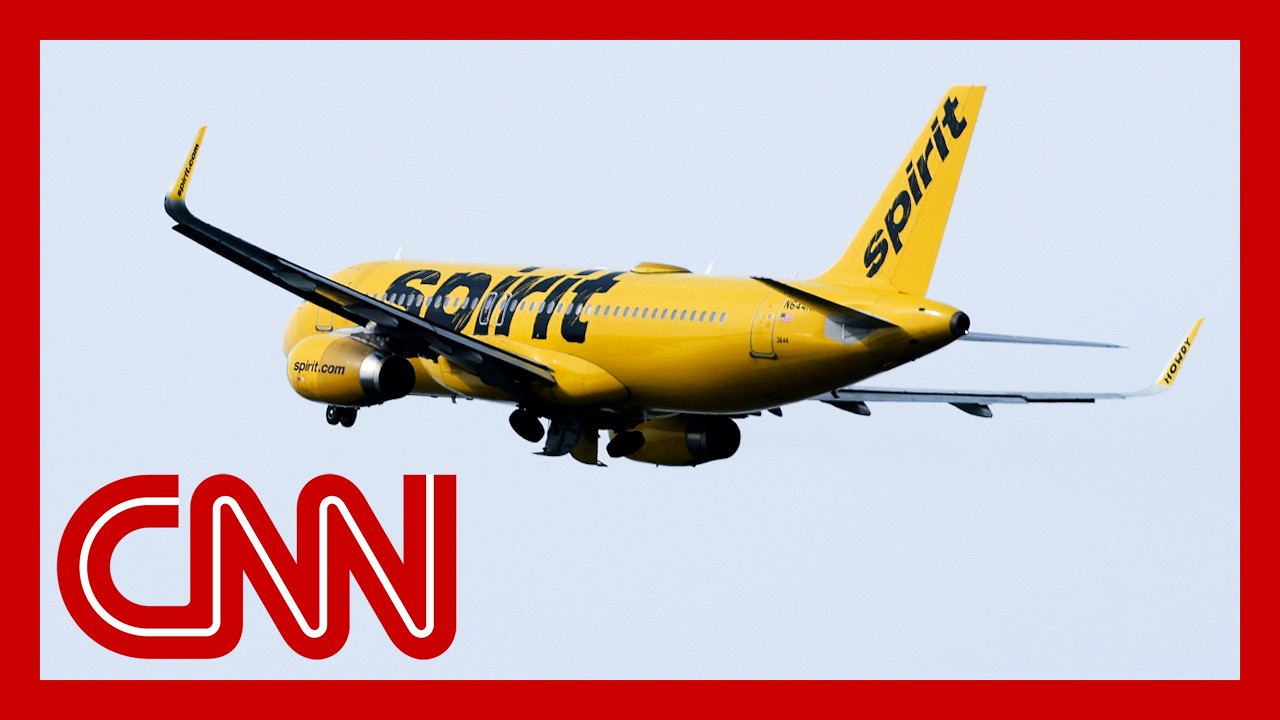
In a surprising and unprecedented move, Spirit Airlines has announced the termination of its operations, leaving millions of passengers stranded and over 17,000 employees suddenly out of work. This morning, the budget airline revealed that it has canceled all scheduled flights, marking a dramatic end to its 34-year history in the aviation sector. For many travelers, the shock was palpable. Upon visiting the Spirit Airlines website, customers were met with notifications of canceled flights and a warning advising against coming to the airport, as customer service was no longer available.
The final Spirit flight landed at Dallas Fort Worth International Airport just after midnight, where air traffic controllers expressed their well-wishes to the pilots as they made their last descent. “Good luck to you all. Sorry to hear what happened,” echoed through the control tower—a somber reminder of the gravity of the situation.
The airline’s financial woes had been brewing for a while, but the recent spike in jet fuel prices—nearly doubling since the onset of geopolitical tensions—seemed to be the final nail in the coffin. Additionally, Spirit Airlines had been in discussions with the Trump administration for a last-minute bailout but failed to reach an agreement before the critical deadline last Friday. Thus, the company made the difficult decision to cease all operations abruptly.
A Hub of Confusion
At LaGuardia Airport, one of Spirit’s major hubs, confusion and chaos reigned among passengers attempting to catch flights that no longer existed. While some heeded warnings and avoided the airport, others arrived uninformed about the cancellations. Reports indicated that at least two passengers had shown up, surprised to learn that their flights had been canceled. The airport’s terminal, usually bustling with travelers, appeared eerie in its emptiness, as monitors displayed a litany of canceled flights.
Just moments after the announcement of Spirit’s closure, frantic passengers took to their smartphones and apps in search of alternate travel arrangements. They were greeted by confusing messages on the Spirit website about refunds—an uneasy reassurance given the airline’s financial instability.
Financial Fallout and Future Implications
The implications of Spirit’s closure resonate beyond stranded passengers. The airline had distinguished itself as a pioneer of the ultra-low-cost carrier model, a disruptive force that exerted downward pressure on ticket prices across the industry. Yet, as competition intensified and other major airlines began to offer similar low fares, Spirit found itself struggling to maintain its unique selling proposition. Economists suggest that the residual impact of Spirit’s departure may lead to higher fares industry-wide, particularly in markets where the airline had significant market share.
Many industry analysts express concern that consumers may face elevated prices as the competitive landscape shifts. The absence of Spirit Airlines leaves a void that could lead to fewer choices for travelers and thus, potentially higher ticket prices.
Employment Uncertainty
For Spirit’s approximately 17,000 employees, the immediate future is grim. Although some airlines have expressed willingness to absorb Spirit’s flight attendants and pilots, it remains uncertain how many positions will actually be available. The aviation sector has seen a slow hiring pace this year, largely due to escalating fuel costs, making it difficult for displaced workers to secure new employment in the industry.
Among other industries, some Spirit employees may find opportunities, particularly in specialized roles like aircraft mechanics, but the transition may not be smooth. No one denies the harsh reality faced by those who dedicated their careers to the airline, and many voice their dissatisfaction amidst the chaos.
Next Steps for Passengers
Passengers scheduled to fly with Spirit Airlines are now faced with the daunting task of rebooking. While Spirit claims it will process refunds automatically, the potential for delays raises concerns. Travel experts urge consumers who encounter issues obtaining refunds to pursue chargebacks through their credit card companies, a route that offers some consumer protections.
In the immediate aftermath of Spirit’s closure, other airlines like United and Frontier have announced efforts to assist passengers left stranded by offering discounted rates and capping fares. But while these measures may alleviate some immediate stress, they cannot replace the disruption and disappointment felt by countless travelers.
In conclusion, Spirit Airlines’ sudden exit reverberates through the aviation industry, raising questions about the future of air travel and pricing. The fallout continues to unfold, leaving passengers and employees to navigate the uncertain waters of this unexpected development.